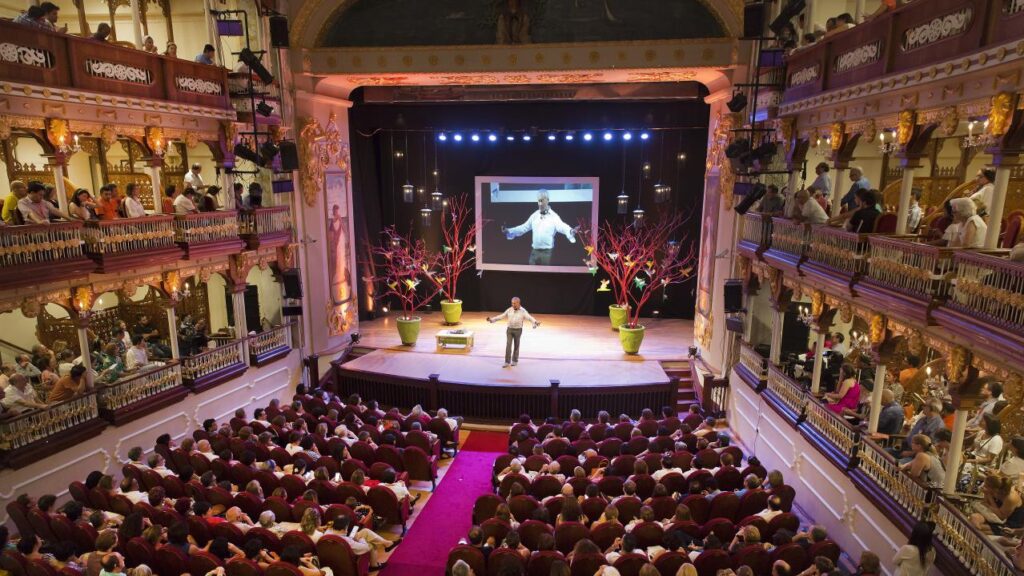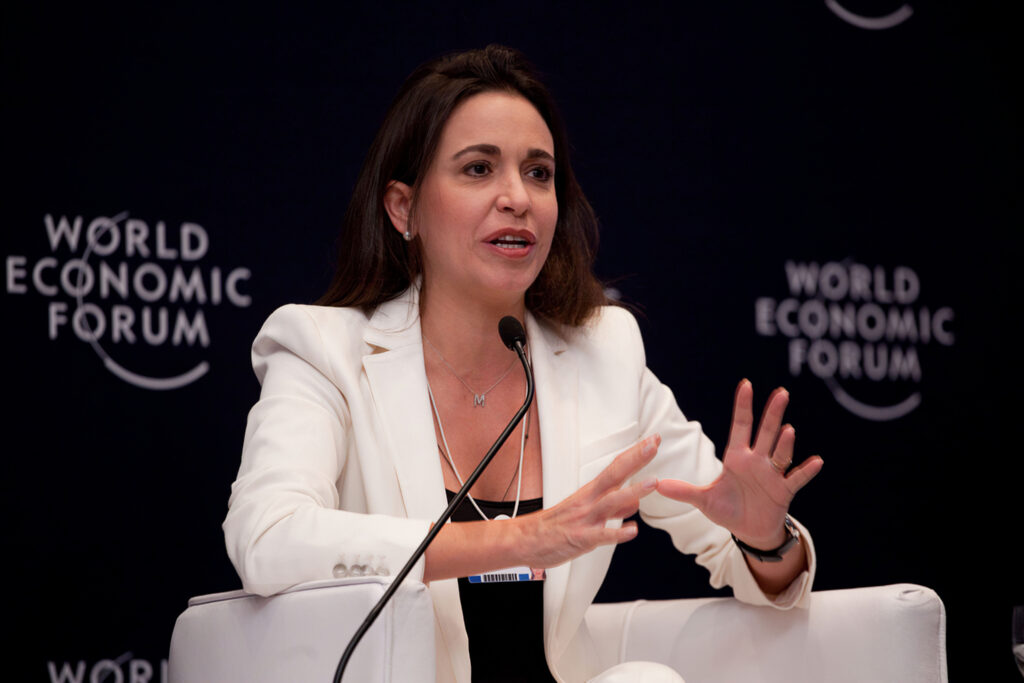
A handful of Colombian and Latin American authors this week said they will not attend an upcoming literature festival in Cartagena due to the planned presence of Nobel Peace Prize winner and Venezuelan opposition leader María Corina Machado.
Author Laura Restrepo was the first to announce her decision not to attend Hay Festival, which takes place in Cartagena from January 29 through February 1, 2026. The author cited Machado’s pro-U.S. intervention stance in Venezuela as her reason for boycotting the festival.
“The reason is the attendance of Ms. María Corino Machado, an active supporter of U.S. military intervention in Latin America,” Restrepo wrote.
Since September, the U.S. military has gathered a mass of warships off the coast of Venezuela, blowing up small boats it alleges are ferrying drug traffickers in the Caribbean and eastern Pacific Ocean. U.S. President Donal Trump has said President Nicolás Maduro’s days are numbered and authorized the CIA to conduct clandestine operations in the country in an apparent effort to oust the dictator.
Restrepo sent a letter withdrawing her participation to Hay Festival Director Cristina de la Fuerte. She said that while she understands the festival’s philosophy of fostering debate from diverse perspectives, with Machado, “a line was crossed.”
“One cannot give a platform or facilitate an audience for someone who, like Ms. Machado, promotes positions and activities in favor of the subjugation of our peoples and against the sovereignty of our countries. Imperialist intervention is not something to be debated, but rather rejected outright,” said the author and former journalist.
Colombia’s former Culture Minister, Juan David Correa, shared Restrepo’s letter on X, expressing his solidarity with those who withdrew from the festival. “And for all those who believe that one thing is freedom of expression, and another is inviting the denial of national sovereignty,” he wrote.
Restrepo’s boycott was soon joined by poet and writer Giuseppe Caputo, who made his public statement through his Instagram account:
“In the face of the serious situation of escalating imperial violence, it is better to cancel participation in a festival taking place in front of the bombarded waters of the Caribbean Sea, one that has chosen to invite someone who dedicated a peace prize to the fascist responsible for these crimes,” he wrote.
Machado, who received the 2025 Nobel Peace Prize on December 10, has expressed her support for the Trump administration and its military actions.
In a recent interview on CBS’ Face the Nation, she showed her support for U.S. interventionism in the country. “I absolutely support President Trump’s strategy,” she said in response to the oil tanker seizure and apparent economic blockade by the U.S. She added that, as Venezuelan people “are very grateful to him.”
In addition to Colombian authors, other Latin American writers have expressed their discontent with Machado’s attendance. Dominican activist Mikaelah Drullard and Bolivian psychologist María Galindo have also declined to attend the festival.
In response, the Hay Festival issued an official statement asserting that, as a non-profit foundation, it provides spaces for reflection and plural conversation, reflected in the “voices coming from different backgrounds, traditions, and positions,” featured in its programming.
“We reaffirm our conviction that open, plural, and constructive dialogue remains an essential tool for addressing complex realities,” the statement read.
The organization also stated that the festival does not align with or endorse the opinions, political positions, or statements of its invited guests.
“We respect the decision of those who have chosen not to take part in this edition, because we understand culture and thought as territories where dissent, critical reflection, and respectful listening are fundamental to citizenship.”
The Hay Festival began in Hay-on-Wye, Wales, United Kingdom in 1987 and has expanded to global editions in Colombia, Mexico, Peru, Spain and the U.S. The festival focuses on literature, music, journalism, current affairs, philosophy, film, theater, and related fields. Its website says the festival “celebrates and inspires different opinions, perspectives, and points of view.”