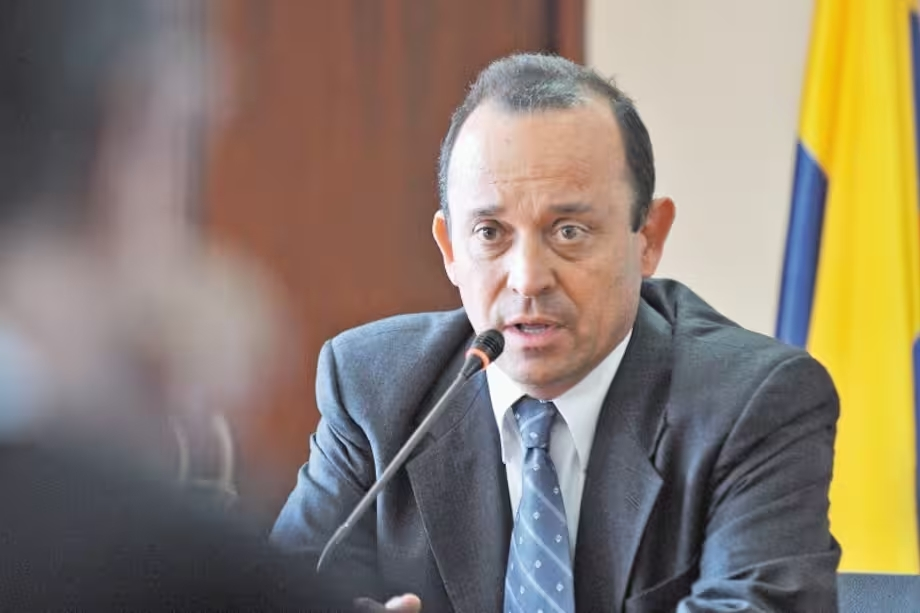
Santiago Uribe Velez. Image credit: Archivo El Espectador, 2023
Colombia’s Supreme Court of Justice last week upheld the sentence against Santiago Uribe Vélez, brother of influential former-president Álvaro Uribe Vélez, for conspiracy to commit murder.
Santiago Uribe, 69, was sentenced last year to 340 months in prison for being a leader of a paramilitary group and for the murder of the farmer Camilo Barrientos Durán, but had appealed the decision.
The case highlights the links between one of Colombia’s most powerful political movements, uribismo, and the worst crimes of the Colombian conflict.
The judgement, announced on June 4, concludes a trial that lasted a decade and relates to crimes committed in the 1990s as part of The Twelve Apostles paramilitary death squad.
The Twelve Apostles, founded in Yarumal in Antioquia and active between the late-1980s and late-1990s, are believed to have been involved in the murders of over 500 people suspected of involvement with the FARC guerrillas.
The group’s name was allegedly a reference to the group’s founder, a priest called Gonzalo Javier Palacio Palacio.
In 2016, Santiago Uribe was arrested and in 2017 he was charged with conspiracy to commit a crime and aggravated homicide. He was released in 2018.
In 2024, he was acquitted of all crimes, but the acquittal was revoked in 2025 and he was sentenced to 340 months in prison, equivalent to 28 years and three months.
Then, in March 2026, after his defense filed a special appeal, the Criminal Chamber of the Superior Court of Antioquia referred the case to the Supreme Court.
But with the Supreme Court’s recent judgement, Santiago Uribe is unable to appeal his conviction for conspiracy to commit a crime and aggravated homicide related to the killing of Camilo Barrientos, who was murdered on 25 February 1994.
The Supreme Court ruled that the evidence demonstrates Uribe’s participation in the creation and operation of The Twelve Apostles, a group accused of killing individuals suspected of collaborating with guerrilla forces in northern Antioquia. According to the court, the initial acquittal resulted from assessing the evidence in isolation rather than as a whole.
The paramilitary movement in Colombia emerged in the 1960s and 1970s as self-defense groups created by local elites who claimed to protect their communities from guerrilla organizations such as the Revolutionary Armed Forces of Colombia (FARC) and the National Liberation Army (ELN).
Although they presented themselves as anti-insurgent vigilantes, they came to be responsible for some of the worst human rights abuses in the country’s history, including massacres, forced displacement, torture, disappearances, and so-called “social cleansing.”
They evolved from self-defense forces into powerful criminal networks that combined counterinsurgency, organized crime, and narcotics trafficking.
Álvaro Uribe was himself convicted of tampering with witnesses in a libel trial investigating his alleged links to paramilitaries. But he was acquitted in November last year because the evidence was collected illegally through wire taps.
Last Friday, 36 years to the day since the massacre of a family of six in the rural neighbourhood of La Solita by The Twelve Apostles, the ex-president told reporters on local station W Radio that he respects the court’s decision.
Nevertheless, he said, “I am devastated, my brother is not the kind of man to finance paramilitaries.”