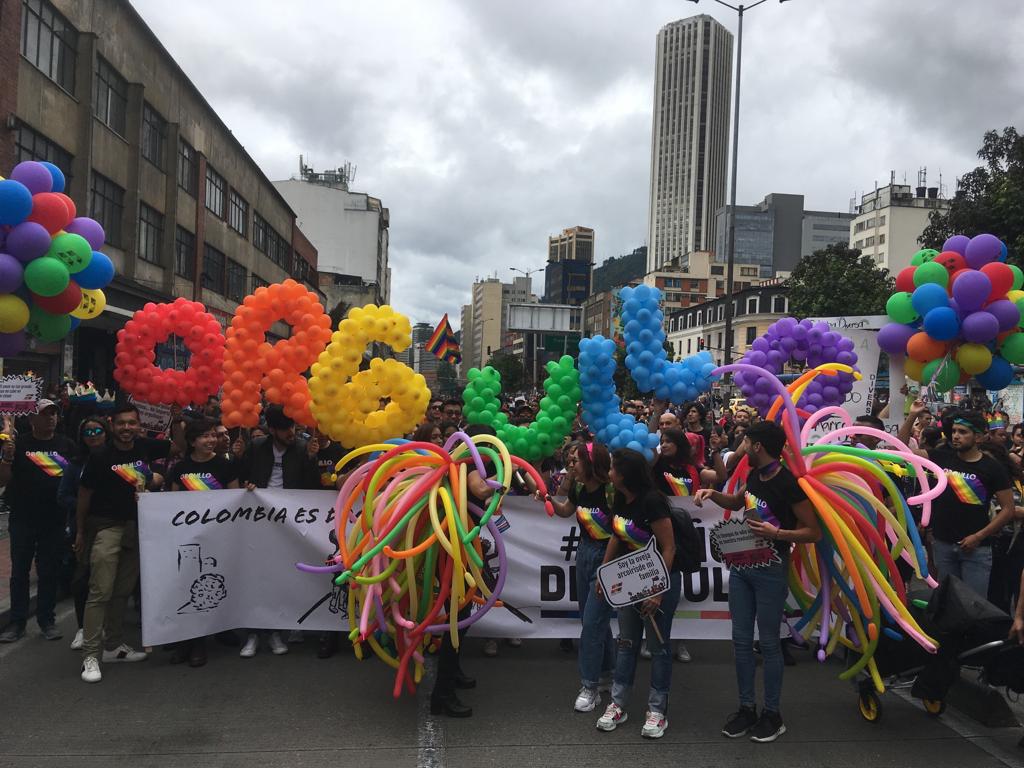
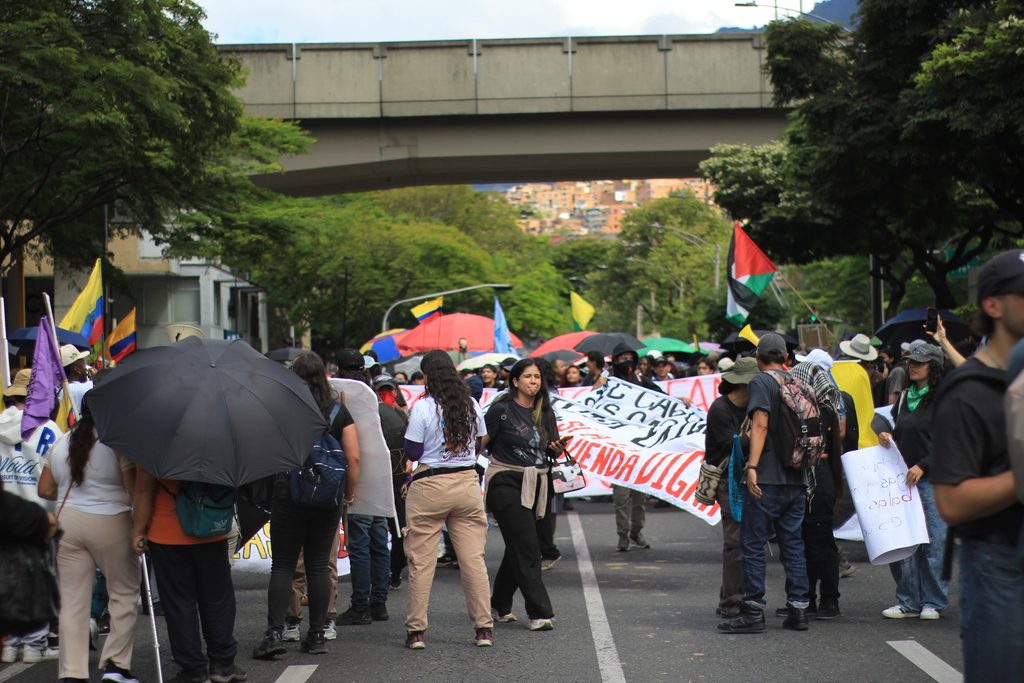
On October 14, social, union and labor organizations, collectives, activists, and various social and political sectors called for a national strike in several regions of Colombia to protest actions taken by the new government.
Some 62,000 people took part in demonstrations across the country, according to President Abelardo de la Espriella, who reported that 98% of the protests were peaceful.
The president has also faced criticism for issuing a decree the day before the protests that critics say could make it easier for police to use force against demonstrators.
Demonstrations took place across the country in cities including Bogotá, Medellín, Bucaramanga, Manizales, Santa Marta, Valledupar, Cali, Popayán, Cartagena, and Cúcuta.
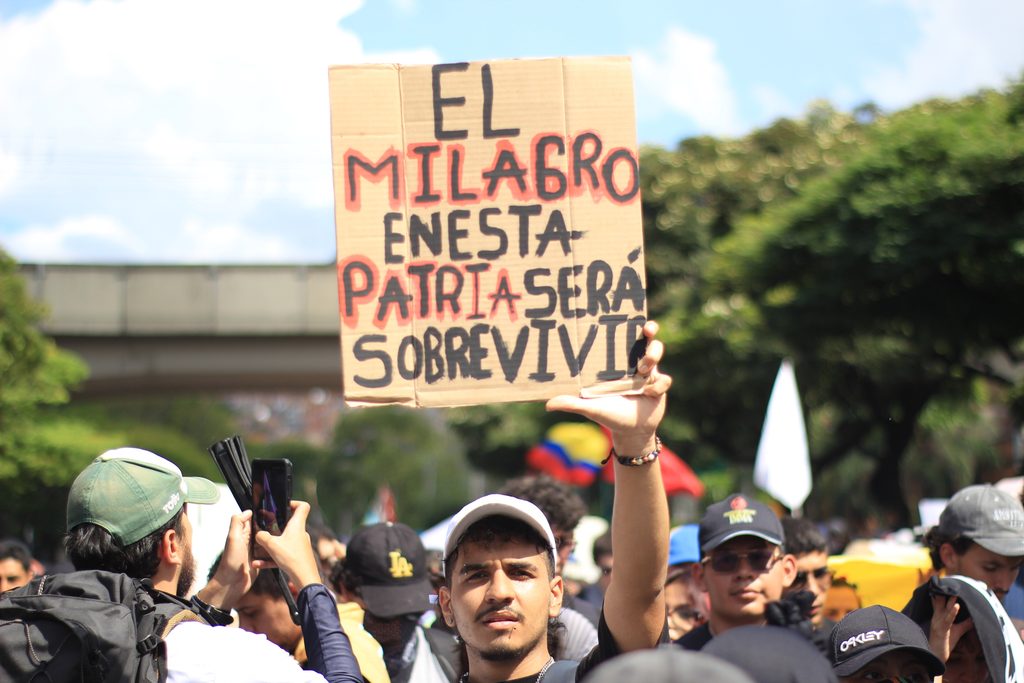
Jesús Villa, a union leader at the Antioquia Teachers’ Association – one of the organizations that called for the mobilization in Medellin – described it as the first demonstration of a new period of struggle in Colombia.
“We, the teaching community and other sectors of the Colombian people, are taking to the streets, first and foremost to reject the fascist government of Abelardo de la Espriella and its regressive policies, which threaten the rights of workers, farmers, women, minorities, and, of course, teachers,” said Villa.
The demonstrations called for national and food sovereignty, better healthcare for teachers, the defense of public education, environmental protection, and the protection of women’s sexual and reproductive rights.
“I took to the streets to march for the rights of women and girls, because this new government disregards girls and the rights we women have fought for—the right to take care of our bodies, to use contraception, and to make decisions about our own bodies,” said Ángela María Quiroz, a farmer from the rural district of San Cristóbal.
Various collectives, organizations, and activists denounced police repression, detentions, and the excessive use of force by security forces in several parts of the country including Popayán, Ibagué, Medellín, and Bogotá.
One day before the national strike, president Abelardo de la Espriella signed Decree 1525, which aims to regulate demonstrations.
While the law previously obliged the government to prioritize dialogue and mediation when dealing with protests, the amendment could pave the way for immediate direct action against individuals who engage in acts of violence during demonstrations.
“When violent incidents occur, police intervention against those responsible will not have to wait until dialogue with all the protesters has concluded,” read a statement by the president’s office.
The decision sparked controversy among various sectors, which argue that it violates the right to protest.
“The decree undermines the right to peaceful protest,” Cristhian Moreno, a lawyer specializing in human rights, told The Bogotá Post.
He added that this principle also extends to the trade union context, including strikes and labor disputes.
Members of the opposition also criticized the amendment.
“The decree on social protest is a pretext for unleashing arbitrary violence against peaceful demonstrations or gatherings,” wrote leftist Senator Iván Cepeda Castro, who narrowly lost to de la Espriella in the presidential run-off election in June.
“What the government wants is to silence people. But yesterday we saw that it doesn’t work. Yesterday’s massive and peaceful demonstrations mark the beginning of a nationwide mobilization against this government and its policies.”