With over 99% of the tables declared, it is now obvious that Abelardo de la Espriella has won the 2026 Colombian presidential election. Our guide clues you on what his presidency will look like and what happens next in Colombia.
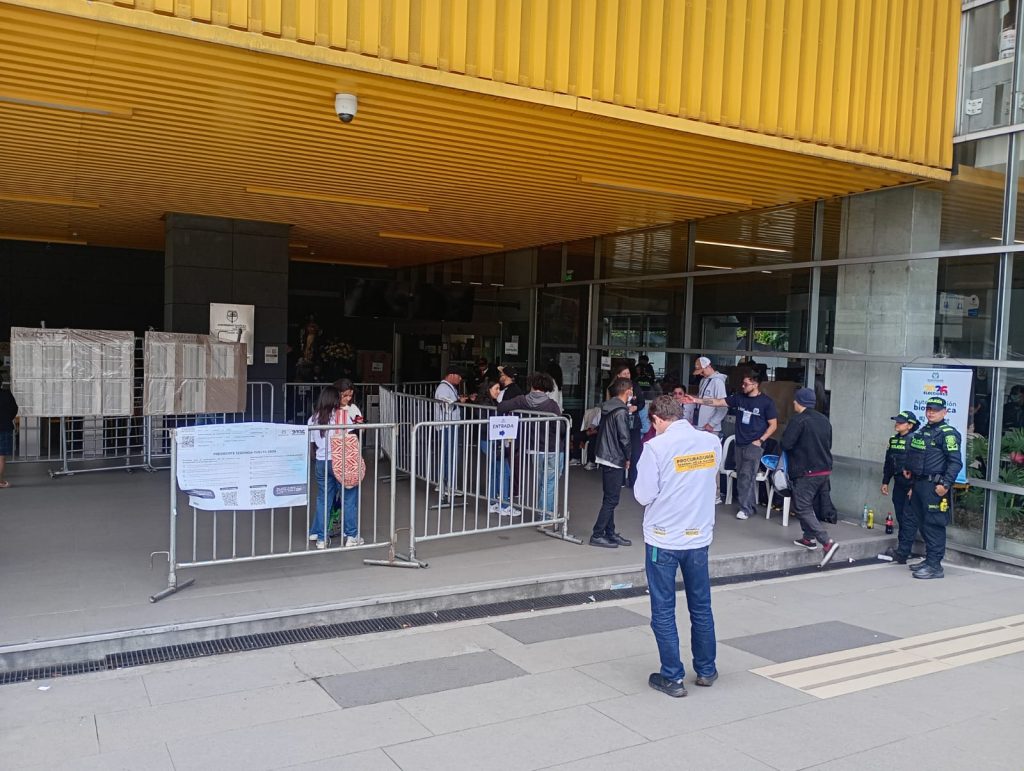
Final counting continues, but the result is clear: the next president of Colombia will be Abelardo de la Espriella. This follows his surprising performance in the first round and cements his unlikely rise to political power. The race was incredibly tight, with de la Espriella leading by under 300,000 votes. As of 17:24, he has 49.67% of the vote compared to Cepeda’s 48.69%. Turnout was high, at around 63% of the electorate.
Iván Cepeda, on the other hand, will be licking his wounds and wondering where it all went wrong. Before the first round of the 2026 Colombian presidential election he had been predicted to finish highest but came in second. His official campaign only flickered into life in the final days and it didn’t make the difference.
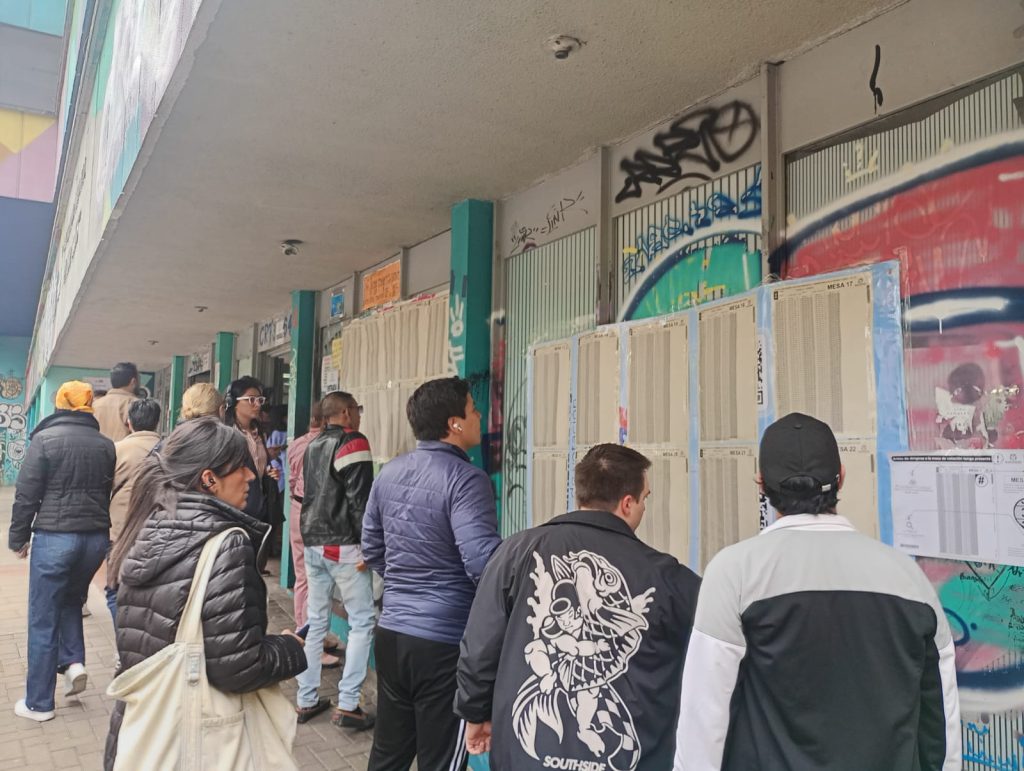
The president will not be sworn in until the Battle of Boyacá memorial on the 7th August 2026, meaning he has over a month to organise a cabinet and work out the fine details of how to put his plan de gobierno into practice. That could take some work, given that it lacks a fair bit of detail.
This should not be seen as a surprise: Colombians have been sick to the back teeth of establishment politics for decades and Abelardo de la Espriella has taken full advantage of that. This is precisely the feeling that enabled Rodolfo Hernández to do so well last time round and that rejected Paloma Valencia and the vestiges of Uribismo this time.
How did Abelardo de la Espriella win the 2026 Colombian presidential election?
With good political sense and a healthy degree of old-fashioned nous combined with an understanding of new media. His campaign featured catchy slogans (firme por la patria, raya al tigre), great tiger branding and plenty of soundbites. On top of that he had what is potentially the single greatest draw in contemporary politics: outsider status.
Colombia is rapidly tacking leftwards, but remains a largely conservative country and Abelardo appealed directly to those people. Critically, he offers a rightist stance that is not directly tied to Álvaro Uribe, the ghost at the feast. While the ex-president is no doubt made up with a win for de la Espriella, he stayed away from his campaign, and with good reason.
Let’s not ignore the elephant in the room, though. De la Espriella reduced the Pacto dominance on the Caribbean coast and that was key to his victory. How those votes were won will raise eyebrows and concerns. Block voting is commonplace, in organisations such as churches, companies, societies and so forth.
While direct and open electoral fraud does take place, a far bigger problem revolves around this bloc voting. It is technically illegal to pressure employees and so on to vote in the way you would prefer, but this is extremely hard to get through a court. The vast majority is plausibly deniable and much of it is legal – people have a right to express their opinions.
The campaigns were vicious and venomous, from both sides. Ad hominem attacks were commonplace and little attention was paid to policies, with good reason. Neither candidate put forward a particularly well thought-out plan de gobierno, preferring cheap rhetoric and bombastic rallies.
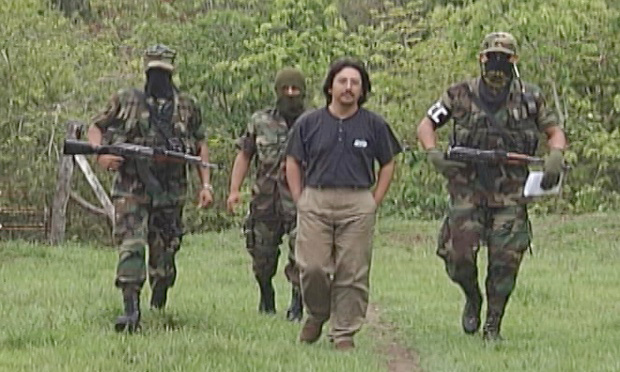
Abelardo went hard on linking Iván Cepeda to the guerrilla, which landed effectively. He also managed to conflate the Colombian left with the wider regional left, reviving the oft-used “volvimos como Venezuela“. He also found staunch allies across the region, gaining plaudits and promises of co-operation from the likes of Milei, Noboa and, yes, Trump.
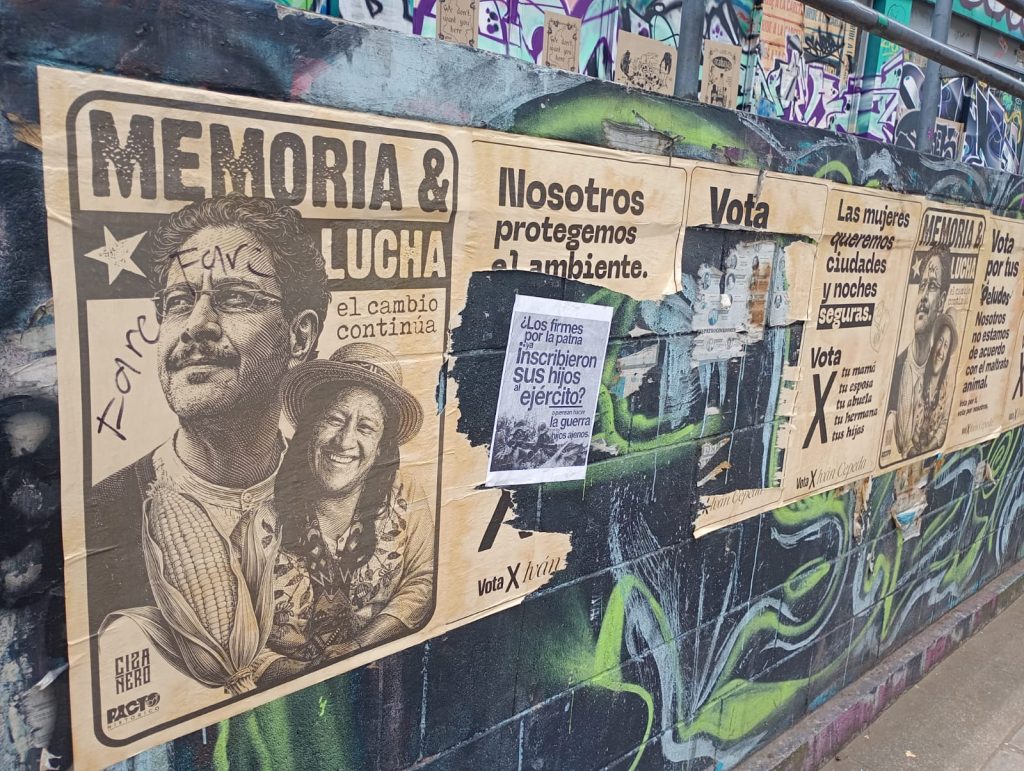
Neither was there any serious attempt to hold a debate between the pair of them, with de la Espriella repeatedly challenging Cepeda who ducked the issue by putting forward a ream of conditions that were then rejected. As noted above, this suited both parties well.
Interestingly, there were a great deal of parallels between the two campaigns. Both promised to help the people traditionally excluded from Colombian politics, whether calling them los nadies or los que nunca. Both disdain the capital and instead principally courted votes on the Caribbean coast.
Differences remained over the question of how to deal with things. They both promised to fight corruption, both promised action on healthcare and both saw the resurgence in armed group numbers and activity as a priority. It seems that Abelardo’s offer to be tough on the latter won more votes from Colombians.
What will de la Espriella be like as president?
It’s a bit hard to say exactly – his outsider image is not just political show, he really is not a career politician and we have little idea of how he will act when in actual power. If he carries his bombastic campaigning rhetoric into his presidency, we will be in for something of a ride.
He is extremely prickly and thin skinned, so is likely to spend a lot of time arguing with various people. Given that he’s prone to making outrageous and provocative statements, there will be plenty of people willing to be on the other side of that. Expect him to battle constantly with journalists and the opposition in equal measure.
Who he appoints to his cabinet is a fascinating question. José Manuel Restrepo, his vicepresident, will have a large say in economic matters, but whoever ends up in the Ministro de Hacienda will be absolutely crucial in terms of delivering on the extravagant promises that have been made.
Rumours swirl that he will appoint high profile rightists who are currently politically homeless – which ties in perfectly with his overall messaging. That means Maria Fernanda Cabal and possibly Polo Polo are on the list. Those are two people that could be incredibly hard to work with and aware of their own ambitions. They also add to the divisive nature of a de la Espriella presidency, whereas he will need to start building bridges.
As an outsider candidate, he does not have a natural path to passing laws and getting his proposals through congress. His party, such as it is, has only four seats in the Senate after March’s elections and so he will need to work with other parties to get support. The Centro Democrático will be happy to, but expect the Conservadores and Cambio Radical et al to extract a price for co-operation. Abelardo might choose to go down the coercion route, pointing to his popularity, but with such a thin majority this is unwise.
What has Abelardo promised for Colombia?
You can read his manifesto for yourself online, or what is there at least. It’s barely a plan de gobierno and more a collection of ideas, positions and wishes. He focuses heavily on law and order with a generous side serving of efficiency savings. Quite how any of this will get done or whether it’s viable is often unclear.
First thing on the agenda is that he’s tough on crime. There will be 10 megacarceles in the Bukele mould, a ‘primera linea’ of reservists and veterans and a new bloque de búsqueda for barrios. He targets a 30% reduction in overall gender-based violence and 40% cut in feminicides. That involves an accelerated 24/7 judicial process in 72 hours maximum. More widely, he wants to reform and better fund the armed forces in order to both establish state control of territory and enforce the state monopoly on arms.
That carries over into his stance on armed groups. He wants to eliminate 330,000 hectares of coca farms using any and all tools available to him. That means spraying, manual elimination, express recuperation of proceeds of crime and so on. The mano dura is also set to come down on politicians. He’s fiercely anti-corruption, which he defines broadly. He plans to start with Ecopetrol and then clean out state organisations of their links to “narco-trafficking, corruption and bad management”.
Politicians and administrators that are not corrupt won’t be safe, either. He promises zero tolerance for ineptitude and inefficiency. He wants results within 100 days and those with empty hands will be told to sling their hook. Ambassadors have been told they need to promote the country, not just shoot whisky on the public purse. Tax avoidance is also on the radar – Abelardo de la Espriella wants to use AI to radically improve DIAN’s processes and deal with widespread avoidance. Subsidies will also be revised to make sure they are going to the right places.
He wants to recover energy self-sufficiency and to restart drilling and exploration as well. Gas is his main focus, although rare earth mining is also highlighted, alongside reform of the costly ElectroCaribe. A main driver is drawing a clear line between legal and illegal mining.
The national budget will also benefit from the efficiency savings – merging or abolishing agencies he sees as redundant such as the Ministerio de Igualdad. That’s part of a shock plan to save around 3.1% of GDP. With those savings, the aim is to get the deficit to -4.8%(!) within the first year, falling to under 3.5% or lower by 2030. Dovetailing with that is a promise to anchor the debt/GDP ratio at no higher than 55%. All this will require annual growth of at least 3% with 5%+ targeted.
On education, there is to be greater focus on technology, as well as a ‘virtual university’ and free computers in schools. Unsurprisingly, details are limited. A STEM program specifically aimed at girls will be set up to deal with the tech gender gap.
Rural communities are a key part of his voter base and he’s promising 600,000 new jobs outside cities as well as 100,000 young people to receive education on improved farming methods and use of tech. 2 million hectares are to be delivered to the people. Rounding up, there will be COP$125bn aimed at co-investment or seed capital for creative projects; mass sterilisation of stray animals to reduce populations and 200,000 carers to be given subsidies.
What happens next for Colombia?
Hopefully, a dignified concession from the Cepeda camp. Regardless, socials are already filling up with denouncements and complaints. This was flagged well before the election for weeks on end, so is hardly a shock. Expect protests, too, possibly from today but certainly within the week. These will likely be a feature of the next four years and Abelardo has signalled that he may come down heavily on them.
Allegations of vote rigging are a staple of Colombian elections at all levels and it would be somewhat naïve to pretend that it never happens. Petro has said he will abide by the results, although will not necessarily accept the preconteo, which is relatively reasonable given the tight final figures. The checking of results could yet provide a twist in the tale, too.
Abelardo also threatened legal action against Cepeda while campaigning, although may not follow through on it. Elections are full of rhetoric and some things inevitably get discarded when entering power. However, if he does make good on this, there may well be a countersuit from Cepeda, who has made similar statements. That would be a highly unusual case against a sitting president. There will be constitutional scrutiny paid to de la Espriella’s U.S nationality and particularly the pledge of allegiance to that country as part of the naturalisation process.
A final point to consider is that when all is said and done, de la Espriella has won by a sliver. Only a quarter of the country backs him and almost the exact same number are against him. This is no landslide and he may well try to govern as though it is. It is a damning comment on Colombian politics that no candidate can even get half the voters to tick their box. Expect further division, cynicism and alienation from traditional politics over the next four years.