We look back on four years of Gustavo Petro’s presidency as the first ever leftist head of state prepares to leave office. It’s been emotional.
Colombian president Gustavo Petro was elected in 2022 as an unprecedentedly leftist leader. Since then, it’s been a roller-coaster ride that’s accelerated erratically in the final year or so. Whether you like him or loathe him, Gustavo Petro has shown that leftist Colombian presidents are just like rightists in many ways, for good or bad.
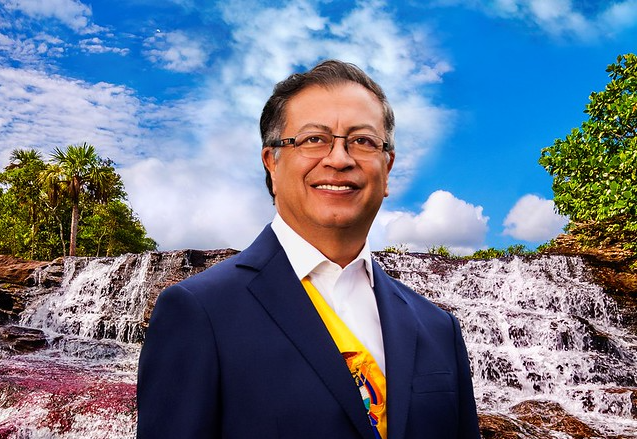
His presidency has marked a significant shift in Colombian politics: the mere fact of someone like him being elected was unthinkable until relatively recently. The fact that he leaves riding relatively high in approval ratings is a feather not only in his cap but for the Colombian left generally.
Many that opposed him in 2022 predicted doom and destruction, none of which has come to pass. The dollar is lower now than when he came to power, the economy is trucking along OK and Colombia has maintained decent international relations with all major partners. The country hasn’t fallen back into civil war nor has the government been sold out.
However, that’s not to say he necessarily deserves the credit for all of this. The dollar weakening is part of a US strategy to rebalance global trade; a Covid rebound was always on the cards and high oil prices have helped him. He got to the halfway point OK and since then it’s been rocky.
Scandal, too, has never been far away, with near-consistent stories popping up throughout his tenure, most never really resolved and part of a worrying trend towards a pattern of hiring unqualified and incompetent candidates because of opaque reasons. Some rumours suggest extramarital interest, others blame corruption. Either way, it’s not good.
He’s also ignored, rejected or deflected various accusations of personal gain through his position. What he hasn’t done is properly address any of the claims. So too for the persistent issues surrounding key allies such as Juliana Guerrero, Laura Sarabia and Armando Benedetti. All have been at the centre of perplexing scandals and have paid no price for them.
Refusing to accept the results of the 2026 Colombian presidential election leaves a particularly bitter taste in the mouth as he leaves office. This ties into his wider problem with Thomas Greg and Sons over passport printing and so on. He’s repeatedly used his position to criticise the Colombian electoral process despite being rebuked on various occasions.
Late-night ramble-tweeting hasn’t helped the optics at all, especially when combined with increasingly erratic discourses in public and persistent reports of troubling behaviour behind closed doors. Notably, there have been repeated accusations of drug and alcohol misuse.
There’s been little continuity in his cabinets, with a whopping 70 (seventy) ministers appointed over the course of his term. Not a single minister made it through the whole four years. Partly that’s due to his recent decision to televise cabinet meetings, which were at times fiery and at best uncomfortable watches.
What’s he done?
Not all that much, to be honest. The Colombian president is constrained by the Senate and a tight legal framework, meaning they have to find cooperation, make deals and build consensus in order to get meaningful legislation passed.
His signature move was the rapid increase in the minimum monthly wage, which won him applause from many in the country. It’s a political masterstroke and reflects his commitment to making life better for working people. The incoming administration will have trouble in January if they don’t approve another large increase.
Land redistribution has long been at the heart of concerns for the Colombian left and he delivered on this, too, granting access to many peasants. That’s 1.8mn hectares formalised as belonging to families and another 700,000 handed over to landless farmers. It’s hard to overestimate how impressive this is in a country that has historical issues with inequality.
Occasionally overlooked is the sharp uptick in drug seizures. In part this is due to a greater quantity of exportation partially because of looser restrictions on coca growing. It would be churlish, though, not to mention that the main driver has been better law enforcement by Petro’s forces.
Environmental matters have also received decent attention, so new drilling has stopped and deforestation is down. Critics point out that while this looks great on paper, it only affects legal operations and that there has been a corresponding surge in illegal mining, for example.
International relations are an area where the president has a lot of leeway and he used this to great effect throughout his term. That meant rambling speeches to empty rooms at the UN, but also positioning Colombia as a strong voice on climate change and international justice. More concretely, economic agreements with China and opening new embassies in Africa have developed new commercial links.
He’s loved travelling, taking more international trips than any other Colombian president in history. The worth of that to the nation hasn’t always been clear, as he’s indulged side quests like hanging out with Roger Waters or strolling around with unknown women in Panamá.
Significant budgetary reform went nowhere, but Petro instead simply tinkered at the edges. This is another area where the president has a reasonable amount of power to simply push budgets up via borrowing and kicking the can down the road – one of the lasting effects of his term will be the enlarged state, with the books further away from balancing than before.
It’s also noticeable that many of the changes he made can be undone by subsequent administrations, with his immediate successor already threatening to do so. That means the ministry of equality will be shut down, embassies closed and projects scrapped.
What will he regret?
All the missed opportunities to change Colombian society and politics in a real, long-term manner. Chief among those is probably Paz Total, but failures to get serious healthcare and budgetary reforms through will also sting.
In 2022, Petro was swept into power on a wave of support for peacemaking among other things. The outgoing Duque government had stalled the peace process put into place by the previous government of Santos, leading to a deterioration in relations between state and non-state actors. Petro promised to get everything back on track.
That failed hard, unfortunately. Talks went nowhere with any of the armed groups and recruitment has risen across the country over the last four years. Not only that, but there’s been a notable increase in violent activity, from kidnappings and murders to attacks on the armed forces and state infrastructure.
He should, but may not, regret not taking the opportunity to draw more people into his leftist alliance. Fractures with his vice-president Francia Márquez started shortly into his time in power and continued throughout. He’s also broken relations with Roy Barreras, among others, and faces criticism from various groups within the wider left.
Family life, too, will be a key regret. His marriage has imploded under the strain of leading Colombia alongside his own peccadillos and his eldest son is under suspicion of corruption and voter fraud. His soon to be ex-wife Verónica Alcocer is also at the centre of various scandals, from living it up on the public purse to more serious accusations of corruption.
What will Gustavo Petro do now?
Not quietly fade into the background like his two immediate successors. He’s much more likely to take the Álvaro Uribe model as a battleplan and remain highly involved in Colombian politics. He’s floated the idea of going abroad into self-imposed exile, but that’s unlikely. For one, it’s unclear where he would be welcome.
The obvious path back into frontline politics is via the Bogotá mayoral elections next year. Despite spending four years doing the city down and starving it of resources, it’s the natural home of many Petristas. That means he absolutely could win that race, returning to the Plaza de Bolívar with what he would consider a mandate to criticise the extant president.
There’s also the very real threat of the current administration pursuing him through the courts. Abelardo made his name as an aggressive lawyer and is on home turf making serious legal challenges. He’s repeatedly threatened to do this, either through the Colombian system or possibly the U.S one.
Quite apart from that, the sheer quantity of unresolved scandal hanging over his time in the Palacio de Nariño means that it’s entirely possible he’ll have further questions to answer, possibly in official terms as part of an investigation.
How will history view Gustavo Petro’s presidency?
In the short term it will depend entirely on your existing preconceptions of the man. His supporters are already wailing and gnashing their teeth, while his detractors are all celebrating and popping champagne corks. The long term view is likely to be more nuanced.
While all the minor salacious scandals have tarnished his name, these things rarely remain big deals decades hence. If anything more solid comes out connected to the more serious affairs such as allegations of vote buying, that could define him.
There will be much ink spilled over coming weeks about his economic legacy and lots of dubious claims made both for and against his actions in office. However, the truth is that he essentially did little. For good or for ill, he was unable to get much of his ambitious plans passed and neither was he able to stop things he was opposed to.
In the end, his legacy is likely to be much less about his time in office exactly and more about what it signalled for Colombian politics in general. The idea of a leftist president is no longer impossible and it’s also clear that a leftist president doesn’t mean an immediate path to socialism, whether you think that good or bad.