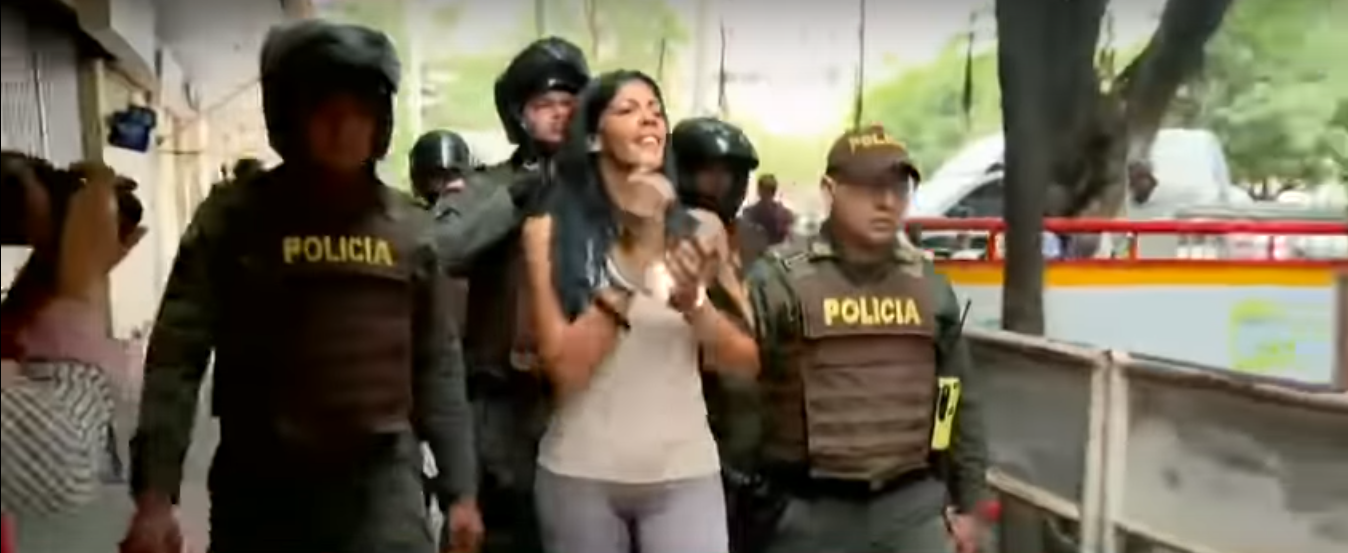
2025 was worst humanitarian crisis in over a decade, says report.
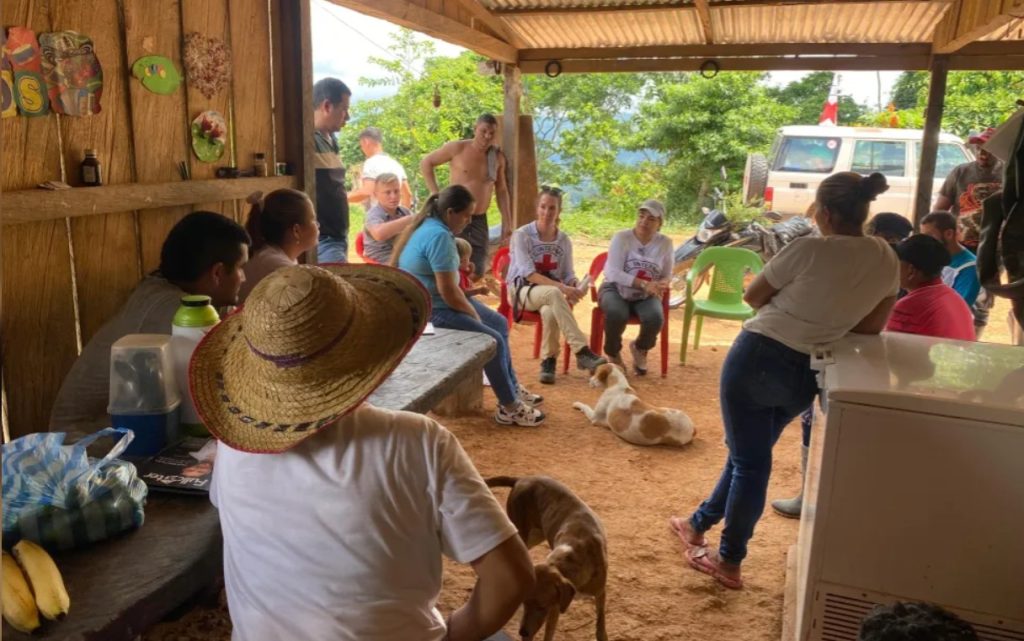
Colombia’s armed groups must stop targeting civilians, urged the International Committee of the Red Cross (ICRC) this week in a report highlighting the country’s intensifying conflict.
In 2025 the impact of armed conflict on communities was the worst recorded in a decade, said the ICRC, with all indicators showing mistreatment of civilians on the rise.
Quoting statistics from Colombia’s victim support unit – the UARIV – the human rights organization reported more than 87,000 persons displaced in mass events by conflict or threats, and a further 235,000 forced to uproot their lives individually.
Also in 2025, at various times more almost 177,000 people were confined in their communities by aggression by armed groups, either by combat or closing of transport routes.
And in a shocking figure, 965 persons were killed or injured by explosives, often delivered by drones, an increase of 34% on the previous year (2024). Most victims were civilians.
“The scale of this human tragedy cannot be described by numbers alone but is reflected in the suffering of entire communities living in fear of fighting,” said the ICRCs Colombia chief Olivier Dubois, presenting the findings.
“Families are forced to leave everything behind in order to survive, the search for thousands of missing persons, and the shattered lives of boys and girls scarred by war,” he added.
New forms of warfare
The ICRC has a key role in promoting International Humanitarian Law (IHL) in armed conflicts – the so-called ‘rules of war’ – of which an important part is keeping civilians out of the crossfire. The Geneva-based organization, which has been present in Colombia for decades, said upholding these rules depended on decisions by the armed actors themselves.
This was an increasingly difficult task given the breakdown of formerly hierarchical armed groups into numerous factions. And with new forms of warfare.
“In 2025, our teams worked in a context marked by the intensification and transformation of armed conflict dynamics, including an increasing use of new technologies, such as the use of drones, with significant consequences on civilians’ daily lives,” said Dubois.
The increase of explosive hazards – booby traps, landmines and drone bombs – affected civilians as clashes intensified in departments such as Norte de Santander, Cauca, Antioquia and Valle.
In these areas a total of 75 civilians were affected by landmines, and more than 540 injured or killed by “controlled detonation devices and launched explosive devices”, a term that includes a range of improvised devices from roadside bombs to armed drones and clumsy pipe mortars firing cooking gas cylinders packed with explosives.

Intimidation and power
The rise in drone-dropped bombs had not only intensified in the conflict but “generated fear, uncertainty and serious harm among affected communities”.
The report also described scant regard for civilian spaces as explosives were found scattered in fields, roads and even schools, stated the report.
“The way in which hostilities are conducted, and weapons are used, has direct implications for civilians and civilian property”, it added.
The ICRC also warned of the horror of sexual violence within the conflict framework, though often hidden and unreported. From its own presence in zones dominated by armed groups, the ICRC was aware that rape and abuse survivors faced stigmatization and fear of reprisals.
This created barriers for victims seeking care and assistance and under-reporting of cases: “The available figures do not reflect the true scale of this phenomenon,” said the report.
Armed groups used sexual violence as a form of intimidation and a show of power, but in some cases also as a form of punishment in communities under their control.
The report also called on armed groups to stop recruiting minors: “No person under the age of 18 should be recruited, used or involved in hostilities under any circumstances,” it said.
The humanitarian crisis observed last year was not a sudden phenomenon, explained the ICRC, but rather the culmination of year-on deterioration since 2018.
Bad month for civilians
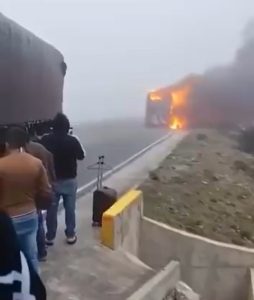
The report follows a calamitous month for Colombia in terms of civilian victims. In late April, 21 bus passengers were killed in Cauca when the EMC armed group exploded a roadside bomb by a queue of stopped traffic.
And in early May a young journalist was tortured and murdered by suspected Frente 36 dissidents in a rural area close to Briceño, Antioquia.
See also: Colombian journalist found dead days after being reported missing
The report’s findings chime with those from thinktanks and UN agencies that have rung alarm bells over growing conflict and abuses by armed groups.
In February, UNICEF warned of a spike in child recruitment with numbers rising 400 per cent over five years, with one minor forced into conflict on average every 20 hours.
The same month thinktank Fundacion Ideas para la Paz (FIP) published data showing that Colombia’s illegal armed groups had grown by 84 per cent during the three years of the Petro government’s Paz Total policy
Armed groups had cynically used rounds of negotiations to expand both in numbers and territory, FIP analyst Gerson Arias told The Bogotá Post.
“As such, the policy gave a gigantic strategic advantage to the armed groups to strengthen their fighting forces,” he said.
War without ideology
A common theme between conflict commentators was the lack of ideology among today’s armed groups, lowering any humanitarian impulses. This even though these groups at times mimicked the uniforms, logos and terminology of former rebel movements with social agendas such as the FARC-EP.
“Any ideological dimension of these groups has been replaced by the dynamics of illegal markets,” Gerson told The Bogotá Post last week. “The dimension now is military strength to sustain those markets.”
From the 1960s to the 1980s Colombia’s guerrilla movements were close to rural communities. That relationship was now predatory, said Gerson. “Communities in Cauca, for example, don’t feel represented or protected by these armed groups who attack them, confine them and recruit their children,” he explained.
The question now is: will the current crop of combatants heed the ICRC’s call this week to respect civilian communities?
ICRC’s Olivier Dubois said that while the context was challenging, international humanitarian law should be foremost in the minds of all fighters in the conflict.
In particular, he called on armed groups to protect children from war, and respect spaces such as schools. He also called for an end to forced disappearances, of which the ICRC recorded 308 new cases last year, on top of the 132,000 historical cases reported by the authorities over six decades of conflict.
“No one should go missing, and no family should have to endure the uncertainty of not knowing what happened or where their loved one is. Preventing the disappearance of persons is an obligation imposed by Interntional Humanitarian Law on all parties to armed conflicts,” he said.
“Upholding international humanitarian law is fundamental to limit suffering in armed conflicts. When these rules are not respected, suffering is exacerbated”.