One week after the 2026 Colombian presidential election first round, there’s been plenty of emotional reaction but little focus on policy. Our round-up of what’s been happening covers twitterstorms, the national football team and accusations left, right and centre.
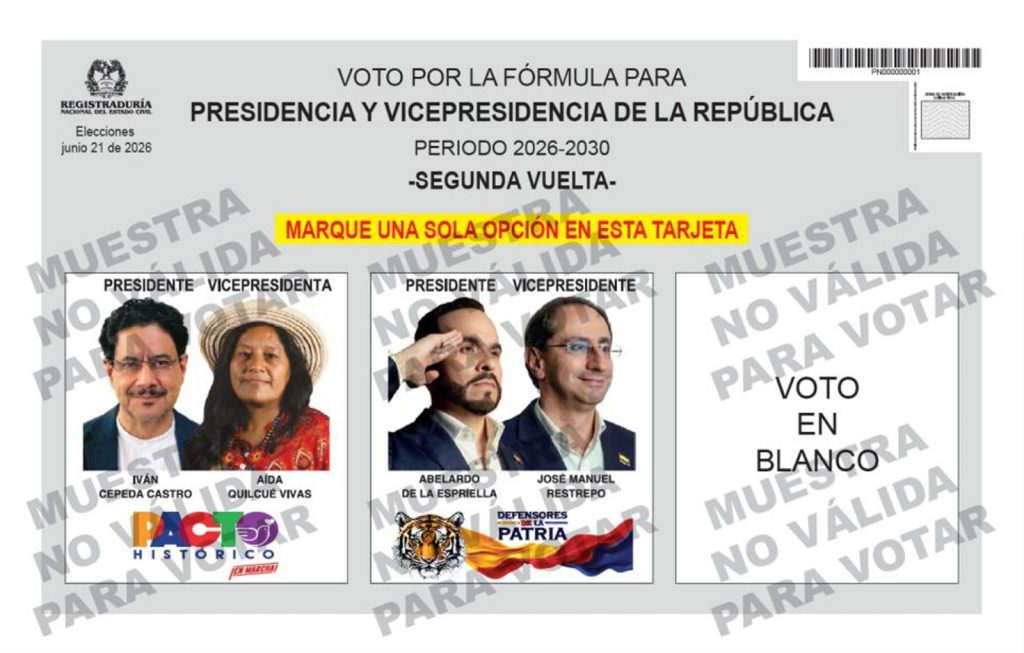
A week on from the shock result in the 2026 Colombian presidential election, the country has been reacting and responding. Rightist and self-described outsider Abelardo de la Espriella took the most votes, beating favourite Iván Cepeda, a leftist continuity candidate, into second place.
That upset all the pre-vote polls, which had had Cepeda coming first with 40-45% and Espriella anywhere between 20-30%. That suddenly transformed Abelardo from potential winner to actual favourite, not just Polymarket darling. However, there remains everything to play for. A week is a long time in politics, as they say, and we have two more to come.
What’s overwhelmingly true is that this is not only highly polarised in terms of the candidates’ positions on how they would run the country, but also highly visceral. This has become a deeply personal and emotional campaign, with supporters of both candidates seeing the other side as immoral, not just having different opinions.
There are few arguments made on policy, with attacks on both candidates revolving around their personality, real or perceived. That’s as true of the candidates themselves as it is of their campaigns and their supporters across social media and elsewhere. This means a complete lack of scrutiny on their platforms.
From both left and right, there is little if any good faith given to their opponents and plenty of hypocrisy. Some outright lies are circulating about both candidates while dishonest and misleading content is commonplace. Again, it’s important to point out this is flooding out of both camps, not just the one you happen not to like.
What happens next?
The second round is set for the 21st June 2026, so there’s now only a fortnight left to try and get over the line. A debate between the two candidates is perhaps the biggest set piece we could see. Incredibly, there were no debates between major candidates in the entire first round.
De la Espriella has repeatedly challenged Cepeda to a debate, confident in his rhetorical skills and charisma. The latter has evaded the issue, trying to set conditions and wary of accepting a debate on what he may feel is not neutral territory, such as with Semana magazine.
If and when any debate actually happens, it could well decide the election. Cepeda is a fine intellectual debater but can lack dynamism and personality. De la Espriella, on the other hand, is charismatic and fiery but prone to speaking too candidly and making unforced errors.
As neither candidate has really faced any hardball interviewers so far, it’s hard to say how they’ll react to tricky questions. Given that they both produced manifestos that were heavy on emotion and light on detail, it would be nice to see them pinned down on specifics.
The vice-presidential candidates, too, have had a parallel if slightly more cordial dance. De la Espriella’s running mate José Manuel Restrepo has invited Aida Quilcué to debate him, though she has so far not accepted. She did invite streamer WestCol to talk with her from Cauca, but he declined, saying it wasn’t the right time.
The difference between the two last week was only 3-4 percentage points, translating into roughly 600,000 actual votes. That means that both candidates are now chasing the 15% of voters that went for other parties, with Sergio Fajardo’s voters particularly attractive.
The Centro Democrático, whose candidate Paloma Valencia wildly underperformed, has unsurprisingly declared for Abelardo, along with the Cambio Radical and several minor parties. Valencia’s running mate Oviedo has expressed his dislike of de la Espriella but stopped short of endorsing Cepeda.
Of the real centrists, things are more complicated and reflect the unease many have with the options on the table. Fajardo refuses to negotiate and insists that the candidates have to win over his voters. López has spoken out against both candidates. Her vice presidential candidate Leonardo Huerta has come out for Abelardo.
How are the campaigns shaping up?
The official Cepeda campaign has responded by navel-gazing and infighting, with the campaign leader Maria Jozé Pizarro coming under particular flak. Cepeda himself has been a bit more punchy than before, calling for an investigation into Abelardo de la Espriella, but is still preaching to the choir.
Cepeda originally called the results into question, but then backtracked early in the week, claiming there’s no evidence of irregularity. Combined with his flip-flopping on debates, he looks indecisive. The controversial Constituyente plan has also been withdrawn by the government, which helps.
Luckily for him, there’s a veritable army of online Colombian leftists ready to do his work for him. First up is a heavy push from environmental groups to use jaguars (as opposed to Abelardo’s tiger) as their symbol with memes celebrating Colombian biodiversity and opposing fracking. El frailejón Ernesto Pérez has also been dragged into this.
Animal rights activists have gone in hard on de la Espriella’s comments about torturing cats with fireworks when younger, which he has attempted to play off as banter. Women’s groups have homed in on his many sexist comments and actions, while LGBTQ groups have pointed out his frequent allusions to homophobia.
Offline, they’ve also been active, with spontaneous decentralised manifestations across the country and particularly in Bogotá. Parque Hippies and Parkway have seen large groups of Cepeda supporters rallying their comrades and leafleting. There were also clashes between an armed de la Espriella supporter and pro-Cepeda demonstrators in Bogotá.
From the rightist side, there’s been an awful lot of attacks on Aida Quilcué, Cepeda’s running mate. These mainly focus on her lack of higher education titles, something she has herself noted. A lot of this has crossed the line into outright bigotry against Indigenous Colombians, including the untrue claims that she is illiterate.
Praise for de la Espriella has come from various political figures in the region, which he’s warmly accepted. That includes Bukele, Trump and Milei, all polarising figures at home and abroad. He’s also had to defend himself against questions surrounding his triple nationality, holding Italian and American passports as well as his Colombian one.
Finally, there’s been a backlash from some quarters over de la Espriella using the Colombian national football team’s shirt. Many claim that it should be a neutral symbol of unity for all Colombians. The Colombian football federation pointed out they can’t legally stop him, a judge ruled that he should stop and he himself is proudly continuing.
What’s the president’s role in this?
It should be nothing, but Gustavo Petro has never been one to agree with rules he doesn’t like. Despite being repeatedly warned by the CNE, he’s continued to speak out on politics even when clearly connected to the election. The Colombian constitution makes it clear that the president should not speak about candidates or politics before the election. There was speculation that he would stand down early to avoid that, but it has been quashed.
He’s been active, even by his standards. Most concerning is his insistence that there has been and will be electoral fraud in this election cycle. His candidate, Cepeda, has dropped this, but he won’t. He is yet to prove anything or present any real evidence for any of his claims, despite a barrage of AI or doctored images online.
Then there’s his allusions or outright allegations against de la Espriella. This came to a head this week when he made a speech in Córdoba where he attacked de la Espriella for pretending to be from the department (where he grew up) when he’s actually a rich kid from Chapinero Alto (where he was born). He went on to call him a defender of paramilitaries and narcos.
The vice presidential candidate has also come under fire from Petro, who has criticised his record as Finance Minister under former president Iván Duque. The current finance minister, meanwhile, has joined the fray, calling de la Espriella’s plans ambitious and unworkable.
Petro has called Trump’s support for Abelardo political interference, despite his own long list of similar comments on regional leaders, including the Peruvian race taking place today and recently having his ambassador kicked out of La Paz for his comments on their situation. He also accused Westcol of disrespecting Indigenous culture by turning Quilcué down.
A particularly bizarre side story revolved around the despedida for the Colombian national football team. James Rodríguez appeared to snub Petro’s daughter, prompting a wave of abuse in his direction before he posted a message promising to make it up to her later.
Petro then tweeted pictures of Yerry Mina looking grumpy with him and happy with Álvaro Uribe, asking whether he preferred dignity or nostalgia for slavery. The central defender then rather predictably also received a torrent of abuse on Instagram. It was striking throughout just how unenthusiastic many of the players seemed about the event.
So, who’s going to win?
De la Espriella continues to lead with most polls, but there are serious questions over their reliability following the first round. Atlas Intel was the closest by far, and they now have Abelardo leading with 51% over Cepeda on 42%. That reflects his majority from the first round and the fact that he’s likely to gain the lion’s share of Valencia’s voters.
All the polls currently show a large turnout for voto en blanco, reflecting the sheer lack of enthusiasm most voters have for either candidate. Note that this differs from ‘don’t know’, it’s an actual rejection of both. However, this is likely to fall away as we get closer to voting day, if this ends up like most previous elections.
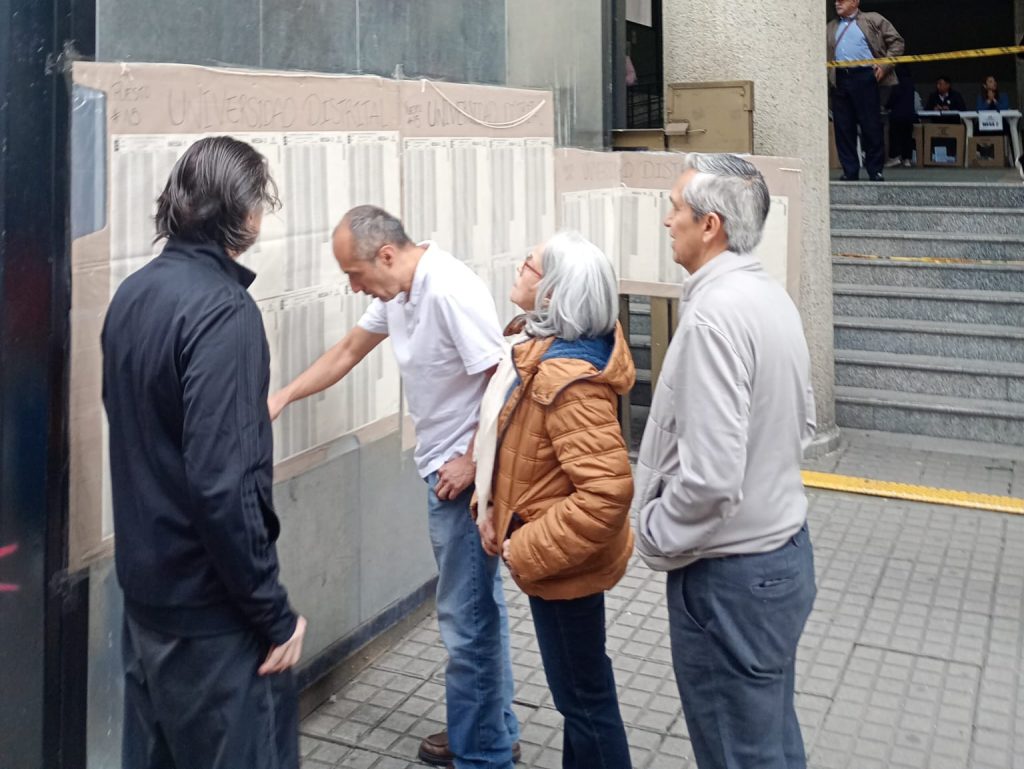
Another common trend in Colombian presidential elections is to see a larger turnout for the second round. It’s hard to know if this is going to happen this time, given that last week saw the highest turnout for decades. There are still millions of non-voting Colombians, so there are certainly potential votes there.
What remains very much on the table is that the next Colombian president may be elected with fewer than 50% of the turnout, let alone half the actual electorate. Apart from a minority of fanatics, it will be a loveless victory. Worse still, there will be a similar minority who are extremely angry about the result.