Colombia’s senate approved the “Jineth Bedoya Lima” law in its final debate yesterday, which introduces mandatory training with gender perspective for all personnel performing public functions.
The law, which seeks to prevent the institutional revictimization of women who are victims of violence, was approved with 52 votes in favor and 1 vote against.
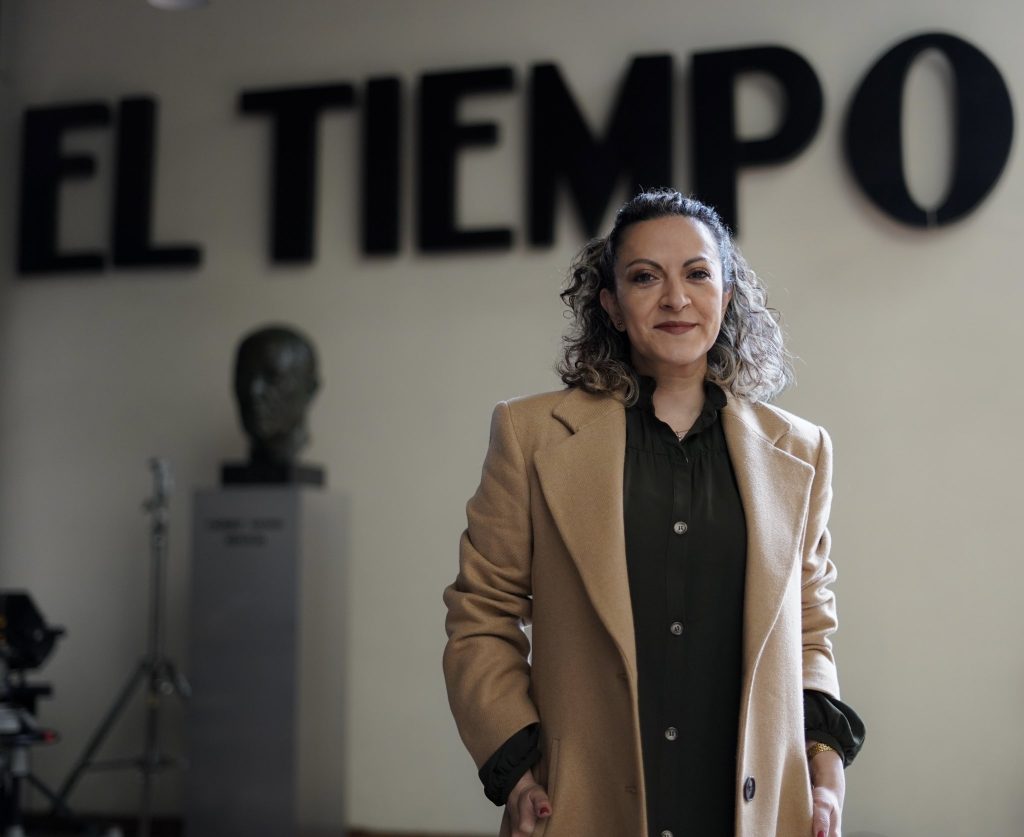
It was named after journalist Jineth Bedoya, who was kidnapped, tortured, and subjected to sexual violence by paramilitary groups in 2000. Her campaign, No Es Hora de Callar, has been part of a more than two-decade-long pursuit of justice.
The bill, also known as the “The Care Without Revictimization Act”, was mainly spearheaded by Representative Cathy Juvinao of the Alianza Verde party, in collaboration with Bedoya, No Es Hora de Callar, and the Foundation for Press Freedom (FLIP).
The law requires continuous training, including training subject to evaluation, and covers the entire public sector, from the judiciary to local and regional government entities, as well as contractors.
It reflects international standards and complies with the measures ordered by the Inter-American Court of Human Rights in the Bedoya Lima and another v. Colombia case, which acknowledges the series of human right violations that she suffered.
The debate in which the bill was approved was attended by Bedoya. During her remarks, she highlighted the ongoing revictimization she has faced over 26 years.
“I am a woman survivor, and I am still under threat, yet I continue practicing journalism… I care about rights, and I will stand up a thousand times over wherever I need to stand, even if I am humiliated and revictimized, for women rights” she said.
The bill’s passing came after criticism by its backers of a “lack of congressional will”, noting that the initiative had not been prioritized by lawmakers as the electoral contest had permeated the entire legislative agenda.
With the bill, which Bedoya describes as a law “to save girls and women,” adopted by both chambers, it is now ready for the president’s final signature.