With under a week to go, who’s in pole position as we go into the final straight in the 2026 Colombian presidential elections?
After a surprising first round of the 2026 Colombian Presidential elections, we are set for a run off this Sunday 21st June. The two remaining candidates are Abelardo de la Espriella, a self-styled outsider who took just over 43% of the vote and Iván Cepeda, the continuity candidate close behind with a shade under 41%.
While some are claiming it’s a done deal, the truth is that it’s likely to be much closer in reality. There are plenty of irons still in the fire and there’s been a lot going on between the two votes. This could be a very close election, which is likely to create a lot of ill-feeling on the losing side, whoever that is in the end.
So, who’s going to win the 2026 Colombian presidential election?
It depends who you talk to. Fanatics on both sides are convinced that their candidate is sure to win and anything contrary to that will be daylight robbery. However, this is the tightest of races. Polls show Abelardo ahead, as he was in the first round, but by a wafer-thin margin. An impressive victory it certainly was, but still only by 600,000 or so votes.
The polls are also not infallible cast-iron guarantees, either. Four years ago they predicted very similar numbers for Rodolfo Hernández against Gustavo Petro and we know how that ended up. All the major firms other than Atlas dropped the ball on Paloma Valencia’s support in the first round, plus these forecasts are close to or within the margin of error.
Turnout usually spikes for the second round, and the 2026 Colombian presidential election may well go the same way. However, the first round turnout was the highest so far this century, so that might be hard to increase. With over 40% of the electorate not voting, though, there’s plenty of space for increased turnout.
It may well come down to the elephant in the room – bloc votes in peripheral regions, especially on the Caribbean coast. To clarify, this doesn’t necessarily just mean straightforward electoral fraud, but also bloc votes from organisations such as churches and workplaces. Expect strong accusations of the latter anyway from the losing side.
What are the campaigns like?
Like chalk and cheese. Abelardo de la Espriella is absolutely politics-as-show, while Iván Cepeda has been largely absent until the final days. Although technically wrapped up, both candidates are going hard with repeated rhetoric even into the last week.
The first thing to come under fire was Cepeda’s claims of vote-rigging and fraud. He backed down after a few days, admitting he had no proof, but the damage was done. Since then, he’s made an effort to put distance between himself and the Palacio de Nariño, even calling out corruption on Fucks News.
On the other side of the fence, de la Espriella has gone for all-out triumphalism, trumpeting his successes and exhorting his followers to make one final push. He retains his ability to control the narrative, but seems to have lost a little momentum after such a big effort in the first round.
The only debate we’ve had between the candidates is the very public debate over having a debate. This sort of tedious finickity wrangling is exactly the political navel-gazing that turns so much of the electorate away from the ballot boxes.
Cepeda insisted on various conditions; de la Espriella replied with counter-conditions and the whole thing fizzled into the ether, Abelardo calling Cepeda cowardly and the latter saying no agreement could be found. Parallel to this was a refusal of Cepeda’s running mate Aida Quilcué to debate her counterpart Restrepo, accusing him of racism.
That stemmed from a controversy over her lack of formal qualifications. Quilcué pointed out with some merit that plenty of overqualified Colombian politicians have done terrible jobs. That then triggered enormous online backlash, much of which crossed into outright anti-Indigenous racism, even insinuating that she could not read.
Ad hominem attacks have been common from both sides throughout the campaign both against other first round opponents and each other. There is real venom between both candidates, including that both are promising to legally go against the other if they win. Cepeda was also forced to publish a health certificate to prove he is not unwell after weeks of insinuation from his opponent concerning his cancer diagnosis years back. Physical appearance has been under attack as well, alongside dress.
Exacerbating this are their fanatical online fanbases. In the case of Cepeda, this has completely supplanted his official campaign. To a degree, this means more preaching to the choir – few Colombians care much about fracking – but also means a plethora of content on a range of issues, given that underdog protest is more natural for them. Most of this centres on his long history of sexist comments and actions.
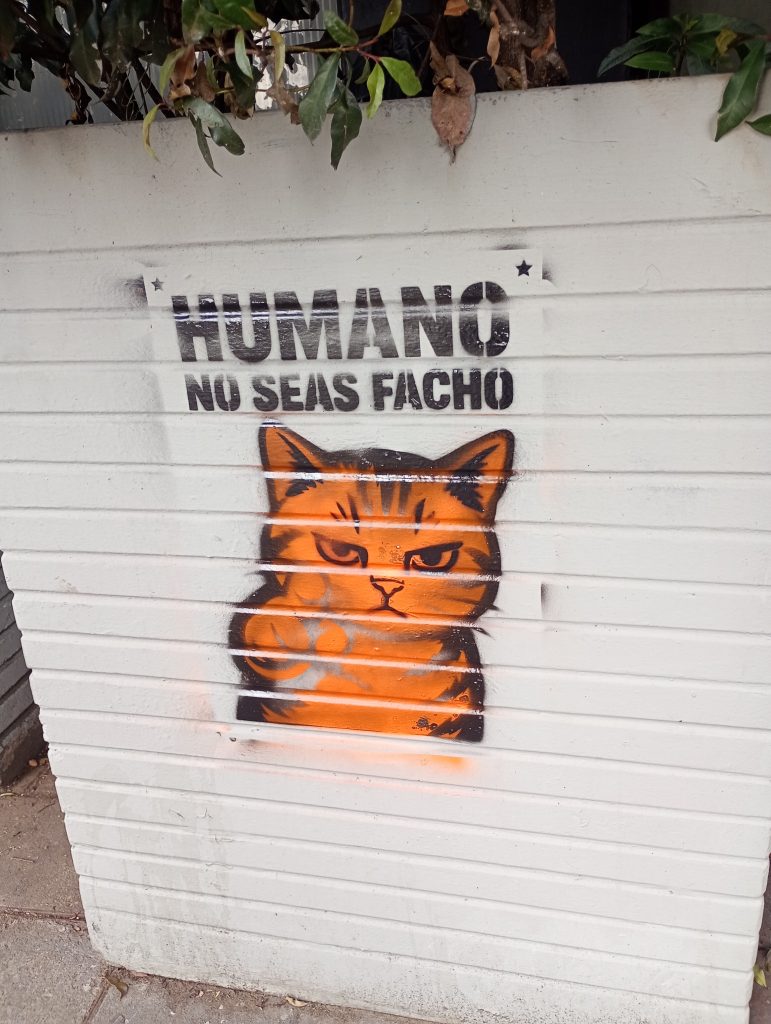
Memes and posters referencing Abelardo’s past comments on torturing cats have proliferated, and great play has been made of him slagging off ajíaco and questioning his love for Colombia. From the other side are waves of content focusing on Cepeda’s perceived closeness to guerilla groups, quickly paralleled with similar content pointing out de la Espriella’s links to narcos, paras and most strangely, the fixer for the Venezuelan regime Saab.
The fact that there’s a World Cup on hasn’t been missed. Abelardo has appropriated the national team’s kit and been semi-sanctioned for it, while famous non-football fan Cepeda has called for a Colombian world cup (to make up for ‘86?). James Rodriguéz posed in a team meeting in a sort of Abelardo-esque pose, generating more controversy.
Football-related shenanigans were also in full effect in the despedida for the squad. Petro was criticised for politicising it, while the squad looked unhappy. Petro made another racist error with Yerry Mina with a misjudged tweet. James was initially accused of snubbing Antonella Petro, which he later cleared up with an Instagram post.
Petro the elder has of course refused to stop playing politics, making repeated and constant observations on the election and both candidates. He’s been censored for that but has simply bulldozed forward and continued.
Questions remain over de la Espriella’s triple-nationality. He has leaned into his American citizenship, saying he’s a proud Republican voter and being namechecked by Trump. Many have called this out, noting that the Pledge of Allegiance doesn’t fit well with being head of state of another country.
What would an Abelardo de la Espriella presidency look like?
Aggressively different, if his pre-election rhetoric is anything to go by and he actually manages to do any of it. His manifesto is heavy on AI and big claims, but short on details of how it actually happens. He’s also promised to disembowel his enemies and to only consider peace via victory in combat.
He’s also proposed 10 megacarceles in the Bukele mould, a ‘primera linea’ of reservists and veterans and a new bloque de búsqueda for barrios. He targets a 30% reduction in gender-based violence and 40% cut in feminicides. That involves an accelerated 24/7 judicial process in 72 hours maximum.
Read more: Abelardo de la Espriella candidate guide
On the civil society side of things, there’s a lot of work to do in the first 100 days, as he wants to do shock therapy on the ailing healthcare system. He promises zero tolerance for corruption, ineptitude and inefficiency. He wants results fast and those with empty hands will be told to sling their hook.
With those savings, the aim is to get the deficit to -4.8%(!) within the first year, falling to under 3.5% or lower by 2030. Dovetailing with that is a promise to anchor the debt/GDP ratio at no higher than 55%. All this will require annual growth of at least 3% with 5%+ targeted. Fracking will be back on the menu, as will extractive industries in general.
Of course, while he’s promised all these things and no doubt genuinely wants to do them, that doesn’t mean he can deliver results. His positioning as outsider isn’t just image control: he really doesn’t have any presence in Colombian politics. It’s fair to assume that the Centro Democrático is likely to side with him, but even other conservatives will probably demand a high price for their support, let alone centrists.
There are questions over his likely cabinet, too. His running mate José Manuel Restrepo is a dyed-in-the-wool Colombian conservative, so will win some allies, but rumours swirl over finding a place for the likes of Polo Polo and Cabal. Not only are such figures divisive, they’re hard to control and could clash with him.
Finally, there will be protests from day dot and probably even before. Once Abelardo takes office, it’s entirely possible that he will instruct the police to take a very hard line against protestors, meaning that we could well see a rerun of the scenes seen under the Duque government.
What would an Iván Cepeda presidency look like?
Very much like the current administration, basically. Cepeda is Gustavo Petro’s protege and his initial plan de gobierno was almost entirely absent of concrete new proposals, simply promising to continue the work underway. He’s now released a new manifesto with some details in it. However, it remains vague, overlong (118 pages) and isn’t entirely well planned out. Critically, he’s abandoned the constituyente plan that Petro had been promoting, which had been widely criticised.
Continuity is politically smart, given that Petro is coming to the end of his presidency riding relatively high in approval ratings. That’s mainly down to the incredible minimum wage hike dished out this year and in 2024. However, many Colombians are irritated at politics as usual and desperate for change. The left traditionally promises this, but is also now tied to the establishment. Cepeda has been in the system his whole life and it’s difficult to see him as a harbinger of change.
Read more: Iván Cepeda candidate guide
The good news for Cepeda is that he stands a good chance of delivering on at least some of his promises. Not only are the Pacto Histórico the biggest party in both the Senate and House, but he is likely to find sympathetic ears in centrist blocs, especially if he is more open to compromise than his predecessor was.
On the other hand, he’s painted himself into a corner on a number of issues. His commitment to peace under any circumstance will mean negotiating from weakness. Exacerbating that will be the uncomfortability many Colombians have to even seeing him at the table, let alone leading negotiations for the state.
He can probably get away with a modest minimum wage increase thanks to Petro-era goodwill, but economics still looks like a weak area. He’ll find effective wealth taxes hard to get through the Senate, while shying away from widening the tax base. Throw in his animosity to the World Bank et al, and Colombian bonds will likely get much more expensive.
Foreign policy is another minefield. Most of the region is now right-leaning and unlikely to do him any favours. Trump is lightly backing his opponent, but he’ll still have to do business with the USA. Too friendly and he’ll look hypocritical, too unfriendly and he worsens the relationship with the biggest trading partner.
His plans for expanding civil society are a mixed bag: much of it is left unclear as to how it would operate. Taking a charitable view, this would be a fascinatingly innovative involvement of public power within spaces traditionally reserved for the same old political actors. For the more cynical, it is a good way to opaquely channel funds to your allies.
So, what now in the 2026 Colombian presidential election?
We wait for Sunday’s result, probably clear around 17:15 Bogotá time. Who that’ll be remains up in the air going into the final few days and it’s entirely possible that many voters won’t make their final decision until they are literally at the ballet box.
What is certain is that Colombia will have a lot of unhappy people, given that the candidates are so different in outlook. As an aside, neither candidate is particularly pro-Bogotá as they both make great play of representing the regions (particularly the Caribbean coast).