One week on from the 2026 Colombian presidential election, what’s been going on, how did Abelardo win and what happens next?
After the Colombian people voted for Abelardo de la Espriella to be the next president of Colombia on Sunday, there has been a lot going on. The dispute over results was resolved fairly quickly and now the president-elect is naming cabinet members and clarifying some of his promises. In the Cepeda camp, meanwhile, there is much wailing and gnashing of teeth.
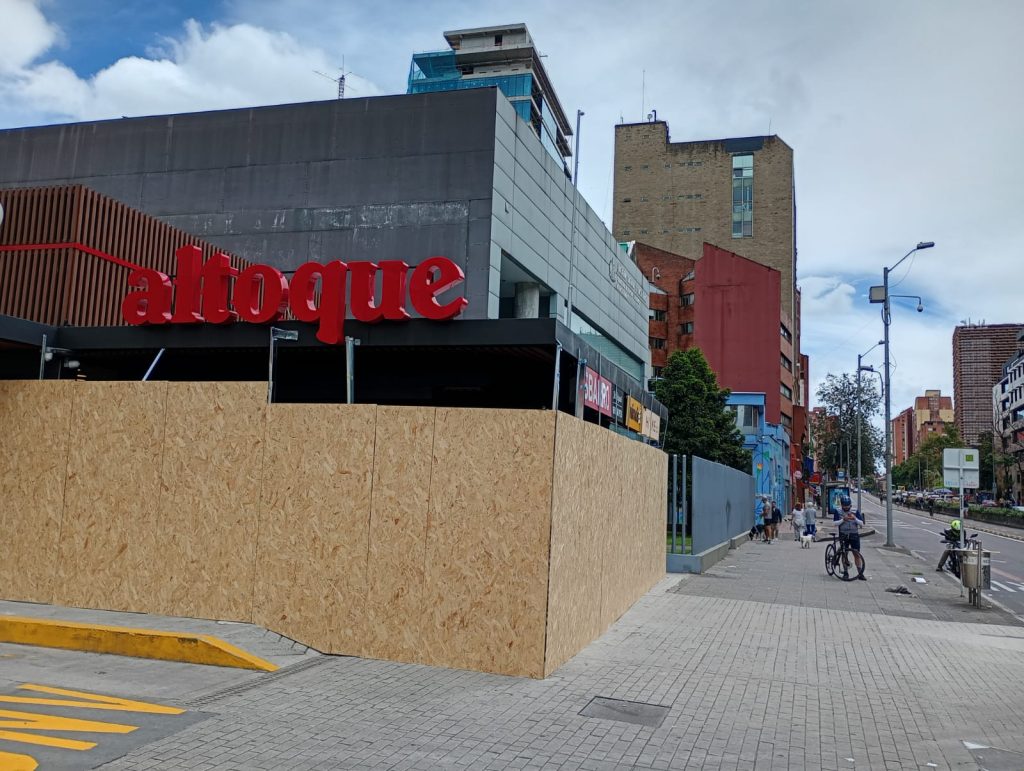
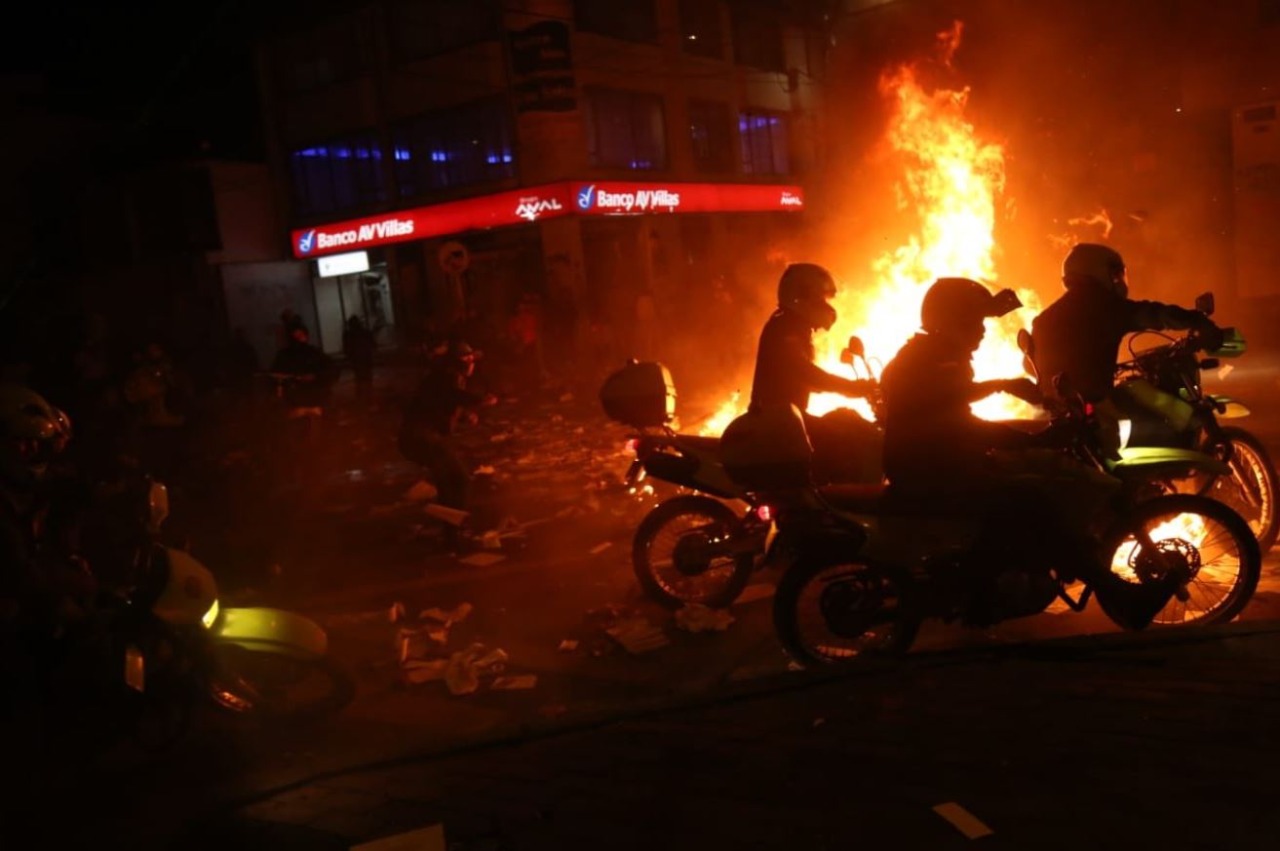
Sunday night saw disturbances in Cali, Bogotá and the Caribbean coast, but since then there has been little to nothing in the way of protests on the streets. That is unlikely to last, of course, but for now the predictions of upheaval and unrest are yet to pass.
It’s worth remembering at this point that the victory was far from unanimous, with de la Espriella winning less than 50% of the votes cast, meaning he has support from less than a third of the electorate. Worse, there’s almost as many people that directly voted against him. This is far from an overwhelming mandate.
President-elect Abelardo de la Espriella has been somewhat muted over the week, calling on Cepeda to concede graciously and significantly dialling down his rhetoric used in the campaign. Gone are the threats to destripar his rivals and a more conciliatory tone is being taken as reality sets in.
He says that he will govern for all Colombians, those who voted for him and those that dis not. He stated that there will be no persecution, as in democracy there should be no irreconcilable enemies. On the other hand, he also reiterated that time was up for those that have sown violence, narcotráfico and corruption. How he defines those people will be key.
There is of course still a long wait for de la Espriella to take office: he won’t do so until August 8th, the celebration of the Batalla de Boyacá. That means there’s plenty of time for him to tie up loose ends and prepare for government, which he’s doing in earnest, including promising an embassy in Jerusalem. It’s also a period where we might see increased activity from Gustavo Petro and protestors.
How did Abelardo de la Espriella win the Colombian election?
Quite simply, by delivering a message that many Colombians wanted to hear, packaged in branding that appeals to many voters. There are lots of conspiracy theories and bizarre takes circulating, many of which don’t stand up to much scrutiny. The simple fact is that Abelardo had a strong populist campaign.
Despite foreign journalists being desperate to connect Abelardo’s success to the likes of Trump and Milei, the truth is that this was a campaign which was very much fought on Colombian lines. It’s certainly true that de la Espriella admires and likes both men, along with Bukele. However, the issues that Colombia faces are different to those countries and Abelardo is his own man, for good or for ill.
Simply put, he has a gift both for understanding much of the Colombian electorate and for being able to speak to them. His image is carefully curated to appeal to his audience and his message goes directly to the issues that many voters see affecting them daily. He also artfully used socials to hammer through both his core message of order and image as a winner.
A lot of the Colombian establishment have been taken by surprise that an outsider can simply waltz in and take the votes they see as theirs by right. That should not shock anyone in reality – this happened last time around with Rodolfo and has a history stretching back to Uribe. Given the calibre and track record of most establishment politicians here, it’s no wonder many Colombians reject them out of hand.
Nor is it a stunning surprise that ‘small c’ conservative social policies combined with populist economic ideas were popular with Colombian voters. Despite huge strides towards liberal attitudes in recent years, the electorate is still largely conservative socially. Religion, too, is a vote-winner, with the formerly atheist de la Espriella making conspicuous church visits and contrasting that with Cepeda’s lack of obvious faith.
Finally, he was promising order. This was not just about crime or armed groups, but also over fiscal responsibility and corruption. Petro’s government has felt increasingly erratic in recent months and a promise to bring things into line went down well with many ordinary voters who just want things to be less chaotic.
This is not popular on Colombia’s liberal left, and with good reason as the falsos positivos remain firmly in the minds of many. For many other voters though, especially in large cities, the blight of street violence is visible and present every day. Combine that with increased armed group activity across the country and its not hard to see why the mano dura is popular.
Two areas of the country in particular were important for Abelardo’s victory: Bogotá and the Caribbean coast. On first glance this seems counterintuitive as he lost them both. Dig deeper and it’s clear that he significantly narrowed the gap to the Pacto in two of their key strongholds.
Abelardo made much of his costeño background throughout the campaign, dovetailing this with his outsider status to reinforce his non-establishment credentials. This gained him votes in the Caribbean as well as enabling him to make alliances with the likes of the Chars in Barranquilla. He’s the first costeño president in over a century.
On the other side of the battle, Cepeda and Petro have both come in for heavy flak and with good reason. Youtuber and historian Iván Gallo has accused Cepeda of being myopic, arrogant and even Stalinist in his attitude to other leftists. Daniel Mendoza joined in, saying that the Cepeda campaign had been obstinate and ineffective with Gonzalo Guillén adding that the candidate’s fastidious moral superiority had been a problem and that he was incapable of self-criticism.
The official campaign was all at sea throughout the race, never properly harnessing or even aiding the immense power of their social media support and thus handing control of the social narrative to the slick and agile messaging of El Tigre.
Petro surprises everyone
Well, sort of. Petro rejecting the preconteo and insisting on waiting for the escrutinio was on everyone’s bingo cards. Neither was it a shock to see him taking to Twitter and embarking on rambling tweets decrying foreign involvement and wandering off on tangents. The surprise came with his fairly meek acceptance of the results and promise to hand over power.
That came as a relief to many who had worried that the President would do something erratic and unconstitutional. In the end, those fears did not come to pass, with an absolute bare minimum of rhetoric by his standards. It now seems that the transfer of power will be relatively straightforward.
He did, however, find time to make accusations of foreign interference, with Israel and the US in his sights. He made allusions to the rerunning of the recent Romanian election after the EU found evidence of Russian involvement, but sadly concluded that things were different in Colombia so he would have to accept the result. As usual, evidence is thin on the ground.
His government has been accused of doing the Clan de Golfo a few favours by getting rid of inconvenient generals and so on via the old Commissioner for Peace, Danilo Rueda. This is an old scandal, stretching back to 2022, but to have it come out now is highly problematic.
Finally, Petro has declared that he will be the leader of the opposition throughout the de la Espriella term. He says that won’t clash with the handover of power, which is looking like it could be a very frosty affair at best. He also says that the true opposition to Abelardo will be the people of Colombia.
What a de la Espriella government will look like
Despite running as an outsider who will give opportunity to los que nunca, Abelardo looks set to stuff his cabinet full of los que siempre. There are plenty of well-known faces here, with Maria Fernanda Cabal and Rodrigo Lara probably the two most high-profile names.
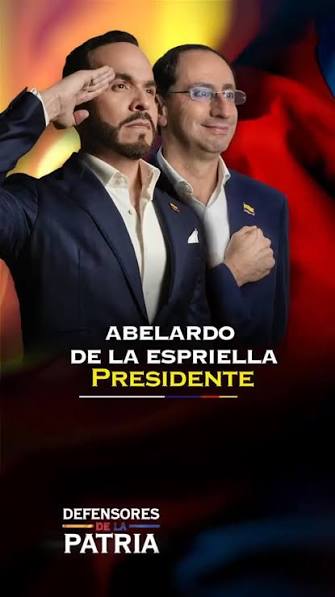
Cabal was the best-known Uribestia in the country before dramatically jumping ship a couple of years ago and forging her own political path. It’s no surprise to see her linking up with Abelardo, but the former most-popular Senator in Colombia can hardly be called an outsider. There is also no lack of ambition in her baggage.
She will take on defense duties, a role that has traditionally needed diplomacy and reserve. Those are two qualities rarely associated with the outspoken and often controversial Cabal, who has an almost de Gaullist iron will and conviction in her beliefs. Some will see that as a major positive, others will be concerned about inflexibility.
The Interior Ministry, meanwhile, goes to Rodrigo Lara. This perennial political player was last seen running for Bogotá Mayor. He’s also been a Senator, Congressman and president of Cambio Radical. Again, very much an establishment figure with limited real-world experience.
His naming also makes sense for Abelardo though – his campaign for the Mayoralty of Bogotá was heavily focused on law and order, evoking Batman (!) along the way. Much of this was similar to de la Espriella’s proposals – a sort of Dad’s Army of ex-servicemen, drones to patrol the streets etc.
Elsewhere, there are appointments that raise eyebrows, to say the least. Medellín mayor Fico Gutierrez was a clear supporter of Abelardo’s campaign and his sister could be given control of the ICBF. Elsa Noguera, a key Char ally, is tipped to take over at the Ministerio de Hacienda.
More Caribbean power players have places at the table too – Mauricio Gómez Amín is assured of something to do, with Abelardo describing him as exceptional. The Cepeda family (not that one) are likely to get two seats, for Efraín, Senator for three and a half decades and president of the Partido Conservador, and his daughter Daniela.
El Tigre has also doubled down on his mano dura rhetoric, promising to start fumigating coca fields from the day he assumes office. Videos are circulating on social media of soldiers promising to show the country what they’re made of when they are “freed from their chains”. Make no mistake, things are about to change.